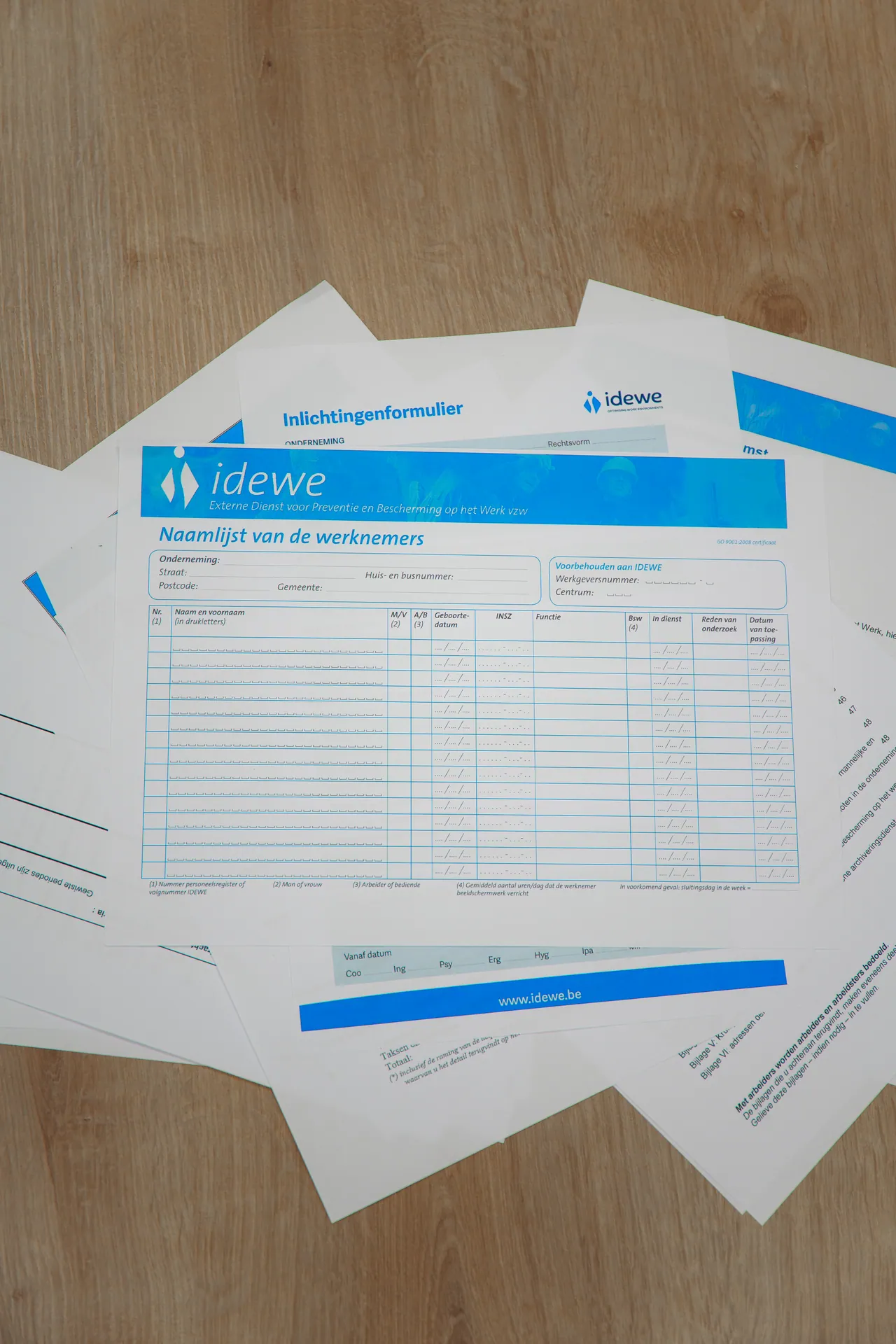
A holiday certificate (vakantieattest in Dutch, attestation de vacances in French) is the document you issue as an employer to a white-collar employee who leaves, together with his leaving holiday pay of 15.34% of gross pay. The certificate shows how long he worked for you, what holiday pay you already paid and how many holiday days he already took. His new employer uses it to offset the holiday days and holiday pay of the following year. A blue-collar worker gets no holiday certificate from you: his holiday pay comes from the holiday fund. A certificate that is missing, incomplete or inaccurate is a level 2 offence.

The holiday certificate is one of the documents you prepare at every departure. The full list, with the C4 and the individual account, is in our checklist of social documents at the end of employment. This guide only covers the holiday certificate: when, what it contains, what the holiday pay costs and what the new employer does with it.
Holiday certificate: when do you issue it?
The Royal Decree of 30 March 1967 on annual holidays links the certificate to the leaving holiday pay (vertrekvakantiegeld). In every case where you pay leaving holiday pay, you also hand over a certificate, one for each holiday service year you pay for. There is no deadline in days: the leaving holiday pay is paid "on his departure", and the certificate goes with it.
| Situation | Leaving holiday pay and certificate? | When |
|---|---|---|
| End of a white-collar employee's contract (dismissal by you or by him, mutual agreement, end of a fixed-term contract, retirement) | Yes | On departure |
| Start of a full career break or full time credit | Yes | At the start of the break |
| Call-up for military service | Yes | On departure |
| Temporary agency worker on a white-collar contract | Yes | At the end of the holiday service year, or at the end of the last assignment if that comes earlier |
| A white-collar employee works fewer hours for you | No, that is not a departure | The NSSO has you pay the holiday pay in December |
| A blue-collar worker leaves | No | The holiday fund pays the following year |
The holiday service year (vakantiedienstjaar) is the year in which the employee works. The holiday year (vakantiejaar) is the year after, when he takes the holiday he earned. Someone who leaves in 2026 therefore gets a certificate for the 2026 holiday service year, and a second one for 2025 if he has not yet taken his 2026 holiday.
Holiday certificate for white-collar or blue-collar staff: the difference
For a white-collar employee, you as the employer pay the holiday pay yourself. When he leaves, you settle everything he earned with you and he takes the certificate to his next job. For a blue-collar worker, you pay holiday contributions to the NSSO (RSZ) and the holiday fund pays out the holiday pay. For blue-collar holiday pay, the NSSO refers to the National Annual Holiday Office (RJV).
| White-collar employee | Blue-collar worker | |
|---|---|---|
| Who pays the holiday pay on leaving | You, as leaving holiday pay | The competent holiday fund (the RJV or a special holiday fund of the sector) |
| When | On departure | Between 2 May 2027 and 30 June 2027 for a departure in 2026 |
| Who issues the certificate | You | The holiday fund, as a global holiday certificate with the payment |
| What the new employer does | Offsets the holiday pay using the certificate | No offsetting against a certificate from you: the holiday fund pays the holiday pay |
Two cases cross over. If a blue-collar worker becomes a white-collar employee with a new employer, that new employer calculates the holiday pay under the white-collar rules, including the period as a blue-collar worker, and deducts the holiday pay the worker received from the fund. If a white-collar employee becomes a blue-collar worker, even with the same employer, he receives leaving holiday pay at the end of his white-collar contract. How holiday pay works for both groups is explained in our guide on double holiday pay.
What is on the holiday certificate?
The Royal Decree lists nine entries. All of them let the new employer offset without having to call you.
- The period in which the employee worked for you, and the assimilated periods such as illness.
- The agreed working time, and every change to it.
- The gross amounts of single and double holiday pay you paid, with the periods they relate to.
- The contributions you paid on those amounts.
- The number of holiday days the employee already took, and in which working arrangement.
- The additional holiday pay you paid.
- The additional holiday days already taken, and in which arrangement.
- The number of carried-over holiday days.
- The statement that the single holiday pay is an advance payment for holiday to be taken with another employer, which pays those days with a deduction of 90% of the gross daily pay.
Pay attention to point 8. An employee who could not take his holiday because of illness or another suspension may carry those days over. The NSSO says it in so many words: the employer must expressly state those carried-over days on the holiday certificate.
Leaving holiday pay: what you pay on departure
The leaving holiday pay of a white-collar employee is 15.34% of the gross pay he earned with you in the current year: 7.67% single and 7.67% double leaving holiday pay. Assimilated days, such as illness, count with a notional wage. If the employee has not yet taken this year's holiday, you also pay 15.34% of his gross pay of the previous year. In the NSSO's example, the end-of-year bonus is included in that gross pay.
For a quick amount, our tool to calculate holiday pay works out the leaving holiday pay from gross pay.
Holiday certificate from a previous employer: offsetting in the following year
If you are the new employer, the employee gives you the certificate when he takes the holiday days he earned with his previous employer. In practice, ask for it on the first day of employment, so you can plan next year's holiday. Since 1 January 2024, the offsetting works like this:
- An advance per holiday day. For each month in which the employee takes at least one holiday day covered by the certificate, you pay an advance of 10% of the gross pay for those days. The other 90% was already covered by the previous employer's leaving holiday pay.
- Double holiday pay at the main holiday. You calculate the double holiday pay under the ordinary rule, 92% of monthly pay for a full year, and deduct the double leaving holiday pay of the previous employer. That deduction may not exceed what you would owe yourself for the months the employee worked for that other employer.
- Final settlement in December. In December of the holiday year, or at the end of the contract if that comes earlier, you compare the single holiday pay you owe with what has already been paid: the previous employer's leaving holiday pay plus your advances. You pay a positive balance on top. You may deduct a negative balance from the December pay, within the limits of the Wage Protection Act.
Worked example: holiday certificate for a departure on 31 August 2026
Sarah is a full-time white-collar employee earning € 3,200 gross per month. Her contract ends on Monday 31 August 2026. She has already taken her 20 holiday days for 2026. On 1 September 2026 she starts with a new employer, at € 3,500 gross per month. We leave bonuses aside.
At the previous employer, end of August 2026. Her gross pay from January to August 2026 is 8 x € 3,200 = € 25,600.
- Single leaving holiday pay: € 25,600 x 7.67% = € 1,963.52.
- Double leaving holiday pay: € 25,600 x 7.67% = € 1,963.52.
- Together € 3,927.04 gross, with the final pay for August.
The holiday certificate for the 2026 holiday service year states the period from 1 January to 31 August 2026, the full-time arrangement, the two amounts of € 1,963.52, the contributions and the holiday days she already took in 2026. Because she already took her 2026 holiday, there is no leaving holiday pay on her 2025 pay.
At the new employer, in 2027. Sarah worked the whole of 2026, for two employers, and therefore has 20 holiday days in 2027.
| Date | What happens | Amount |
|---|---|---|
| 1 September 2026 | Sarah hands her holiday certificate to the new employer | |
| July 2027 | She takes 10 holiday days covered by the certificate. Simplified as in the NSSO's example, her pay for those days is half a month's pay, € 1,750 | Advance of 10%: € 175. The € 1,575 is covered by the leaving holiday pay |
| July 2027, main holiday | Double holiday pay: 92% x € 3,500 = € 3,220, minus the double leaving holiday pay of € 1,963.52. The deduction stays below 8/12 of € 3,220, which is € 2,146.67 | € 1,256.48 gross |
| December 2027 | Final settlement of the single holiday pay. Sarah earns more than with her previous employer, so the advances and the leaving holiday pay will probably not be enough | Positive balance: paid on top in December |
In the DmfA, the new employer declares the € 175 advance under pay code 1 and the € 1,575 under pay code 12. A top-up in December goes under pay code 14.
What if the holiday certificate is late or wrong?
Since 1 July 2024, the Social Criminal Code has its own article on the holiday certificate. An employer who fails to issue the certificate, or draws it up incompletely or inaccurately, risks a level 2 sanction. The administrative fine is € 250 to € 2,500, multiplied by the number of employees concerned, up to 100 times at most.
Not paying the leaving holiday pay itself, paying it only in part or paying it late is more serious: level 3, with an administrative fine of € 1,000 to € 10,000, also per employee concerned.
The practical damage often comes sooner. Without a certificate, the new employer does not know which holiday has already been paid. Either it pays those days in full, the employee is paid twice and a correction follows later, or it waits, and your former employee comes back to you for the certificate.
Common mistakes with the holiday certificate
- Giving a blue-collar worker a holiday certificate or leaving holiday pay. His holiday pay runs through the holiday fund, based on the pay in your DmfA.
- Forgetting the certificate after a short contract. Every departure of a white-collar employee gives the right to a certificate, even after three months or after a fixed-term contract.
- Forgetting the previous year. If a white-collar employee leaves before taking this year's holiday, you also pay leaving holiday pay on last year's pay, with a certificate for that year.
- Leaving out carried-over days. An employee who was ill for a long time may take days with him. If they are not on the certificate, it is incomplete.
- Paying the full wage as the new employer. For days covered by the certificate, you only pay the advance. Paying the full wage means paying the holiday a second time.
- Deducting too much in December. You deduct a negative balance within the Wage Protection Act. Deducting more is only possible with the employee's written consent.
Requesting your holiday certificate as an employee
A white-collar employee asks his employer for the holiday certificate, so after a departure his previous employer. According to the RJV, only the employer can provide that document. For information on a white-collar employee's holiday pay, the NSSO refers to the Inspection of Social Laws (Toezicht op de Sociale Wetten) of the FPS Employment. A blue-collar worker receives a global holiday certificate from the holiday fund when his holiday pay is paid. He downloads it in My holiday account or requests it with the form for requesting certificates on the RJV website.
The holiday certificate in a dismissal
The certificate usually comes at the same time as the other end-of-contract documents. The C4 must be there by the last working day at the latest, see the C4 form. The copy of the individual account follows within 2 months after the end of the quarter. What you arrange for the dismissal itself, from notice to the statement of reasons, is in our guide on dismissing an employee.
When a white-collar employee leaves, Business Centrum prepares the leaving holiday pay and the holiday certificate in your payroll administration, together with Acerta, with a fixed point of contact. If a white-collar employee joins you with a certificate from his previous employer, we process the advance and the final settlement in the payroll. Want to know how that works for your company? Ask us.